Problem
AI could run the checks. The quality engineer still needed to inspect and defend the result.
BuildTwin
COMPANY
BuildTwin
SECTOR
AI-powered AEC / structural engineering software
THE WORK
AI-assisted drawing quality control
AI could run the checks. The quality engineer still needed to inspect and defend the result.
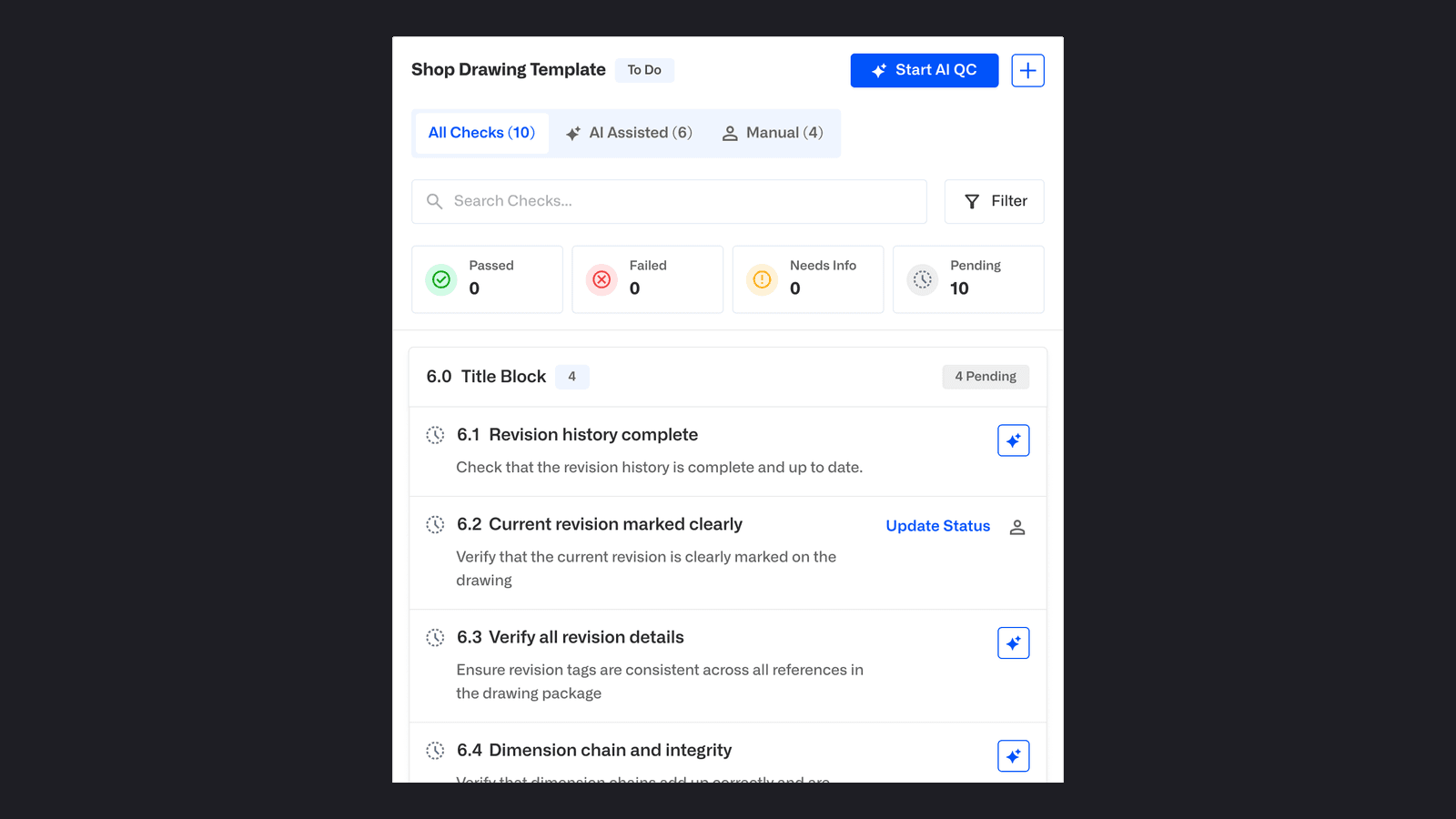
We replaced a compact checklist with an evidence-led review feed that kept uncertainty and human control visible.
01 / THE ADOPTION RISK
BuildTwin was adding AI quality control to structural drawings. A quality engineer would review the results and raise issues before an approver moved the work forward.
AI could perform checks, but accountability stayed with the engineer. If the result could not be inspected and corrected, the older manual process remained easier to defend.
The brief arrived as a compact checklist inside an existing drawing viewer. The deeper problem was whether an expert could trust what appeared inside it.
02 / THE RESET
Three roles were mapped: the detailer who created the drawing, the quality engineer who reviewed it, and the approver who moved it forward.
The AI journey introduced one decisive stage. The quality engineer had to review the system’s work before acting on it. That stage became the centre of the design.
03 / THE TRUST PROBLEM
A reviewer needs enough evidence to decide whether confidence is deserved.
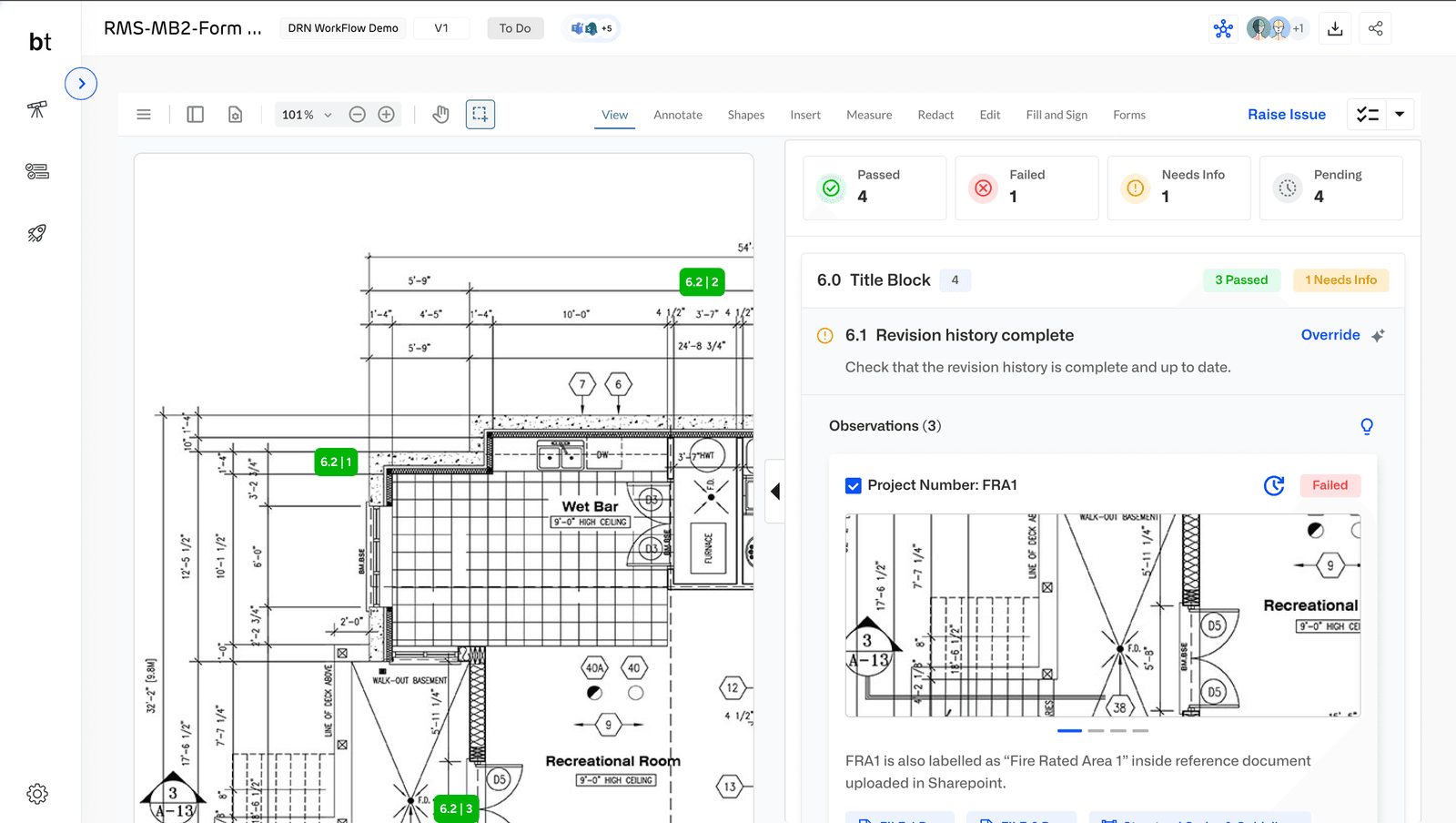
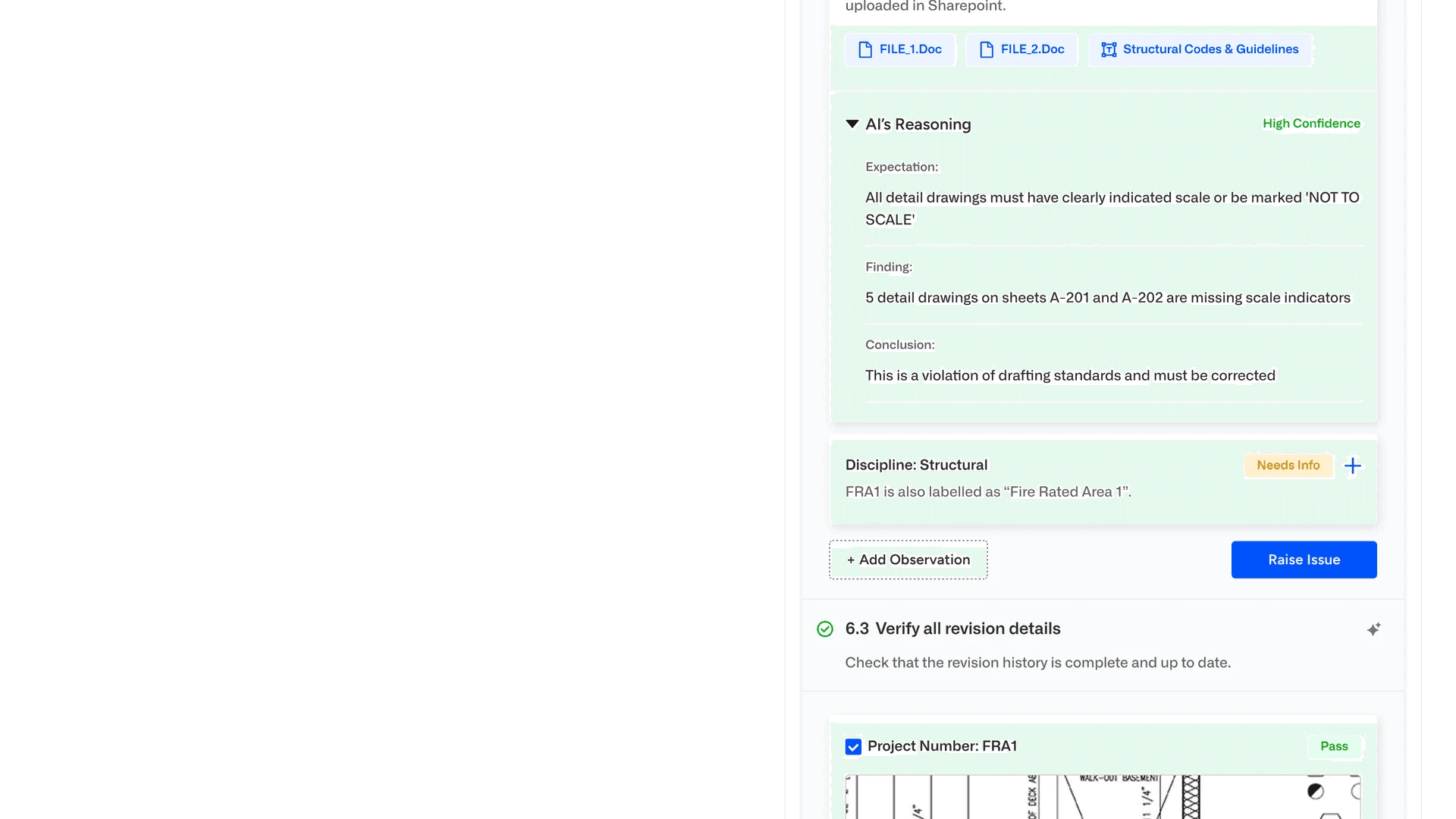
Each result exposed the drawing reference, source document, observation and conclusion. If information was missing, the interface showed what the reviewer needed to add before running the check again.
“We need to train the user to trust the system, but in the beginning, they won’t trust it.”
BUILDTWIN STAKEHOLDER
04 / THE DECISION
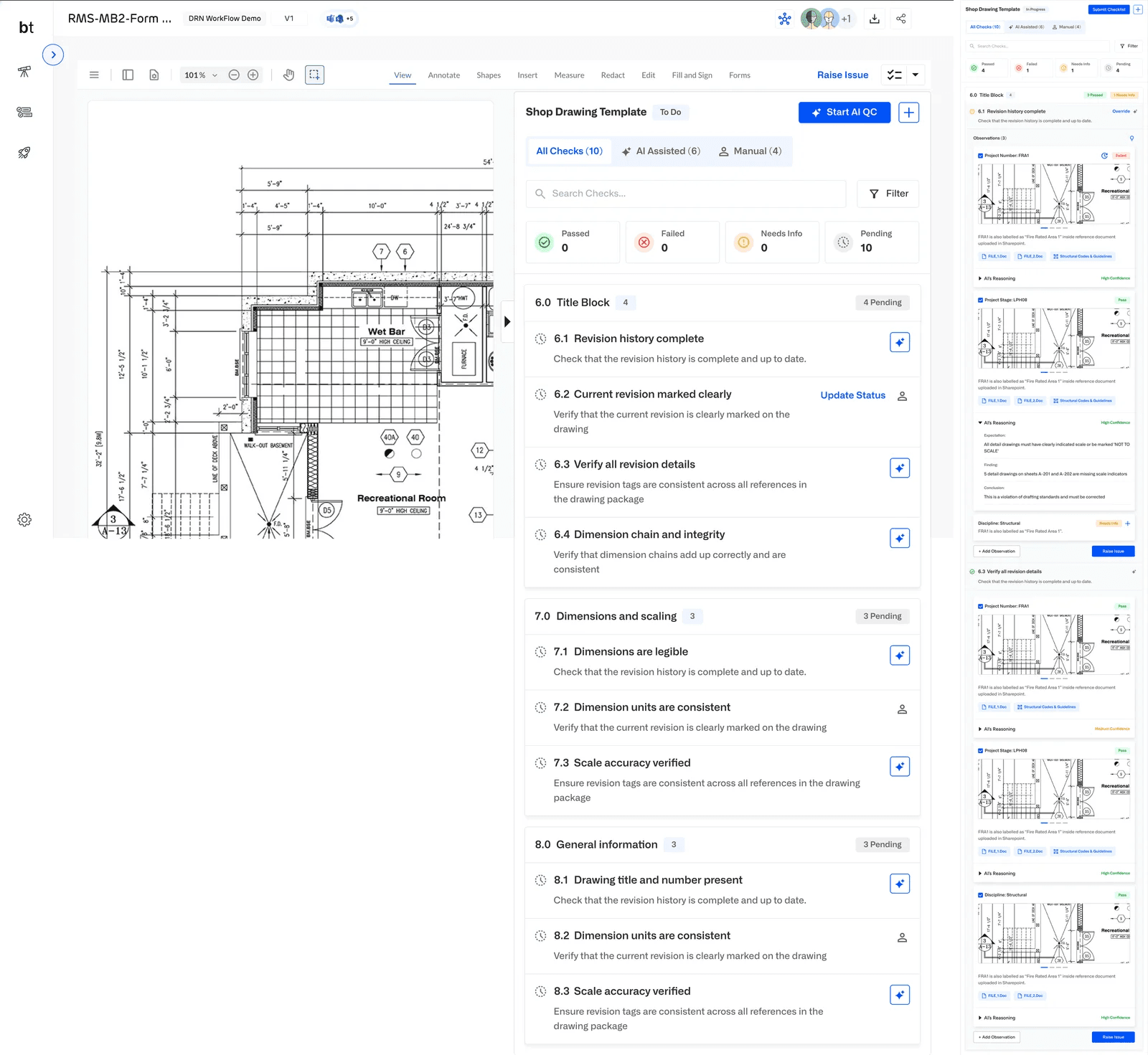
Accordions kept the panel compact, but hid evidence behind repeated clicks. A continuous feed used more space and kept every observation, source and status in the reviewer’s path.
The selected direction made complete review the default. Search and filters remained available, but evidence no longer disappeared when the reviewer moved between checks.
“I don’t want a user to, let’s say, I don’t like this clicking.”
BUILDTWIN STAKEHOLDER
05 / HUMAN CONTROL
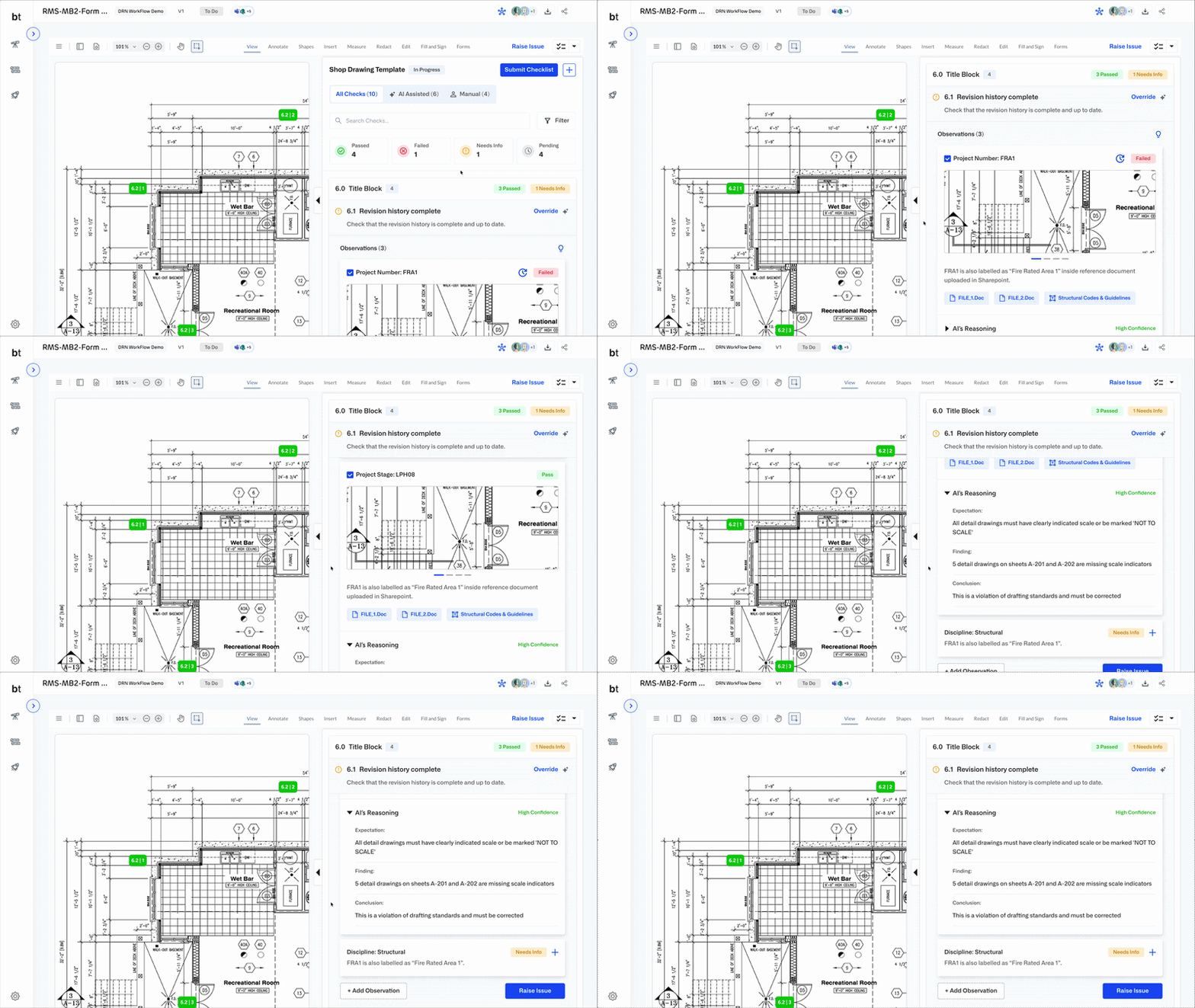
The reviewer could add missing inputs, inspect reasoning, override a status and raise an issue against the observation that produced it.
An override required a corrected state and a reason. Human judgement remained visible rather than silently replacing the model’s answer.
06 / WHERE IT STANDS
Across repeated reviews, the model covered checks in progress, missing inputs, evidence, reasoning, overrides, issues and history.
The available material does not establish what subsequently shipped. Adoption, time saved and accuracy improvement are not claimed here.
WHAT THIS PROVES
The expensive mistake would have been finishing the first interface faster without resolving what the expert needed to trust, correct and escalate.