Problem
Manual and complex onboarding for non-tech-savvy staffing users caused slow setup, low adoption, and high user abandonment.

Scissors
COMPANY
Scissors
SECTOR
Temporary Staffing
WHAT DOES THE COMPANY DO
Software for managing temporary staffing and placements
Manual and complex onboarding for non-tech-savvy staffing users caused slow setup, low adoption, and high user abandonment.
Redesigned the system using UX research and an object-oriented approach to automate onboarding and simplify core workflows like candidate shortlisting, talent pools, and job creation.
Scissors is an Auckland based temporary staffing agency software providing white label services to the staffing agencies with 60,000 temp placements. The users of the system include Division Admin (Recruiters), Group Admin (Client contact for multiple clients), Client Contact (Staffing agency’s client who hires the candidates), Workers a.k.a Candidates.
In the Temporary recruiting industry, self-onboarding is not a usual practice, and users are not very familiar with tech. Hence, Scissors team had to onboard all the users manually while understanding the nature and structure of their organization, upload their databases, train all the users of the system, and customize the product according to their specific requirements. The whole process would take a couple of weeks, and the delay was affecting the customer experience resulting in abandonment.
To build the UX of onboarding for Scissors from scratch, we proposed a comprehensive UX research phase that consisted of understanding the product and overall business domain, assessing the UX maturity of the stakeholders, benchmarking the competitors and understanding the users and their expectations.
UX research methods used during this phase were:
During the discovery phase we discovered problems which required us to think from a different perspective. A pivotal approach to face such problems was the strategic implementation of an object-oriented approach, guided by comprehensive UX research. It not only helped us design an onboarding experience but also helped in identifying and revitalizing core functionalities of the system.
During the discovery phase, while interviewing users, we discovered.
Hence, the ideal users couldn’t be recruited for the research to understand their needs and pain points as they were not tech savvy enough to understand the complexity of the system.
The team identified the underlying problem, and it was important to make the core functions easier to operate and understand to increase the adaptability of the system after onboarding, to increase the conversion rate.
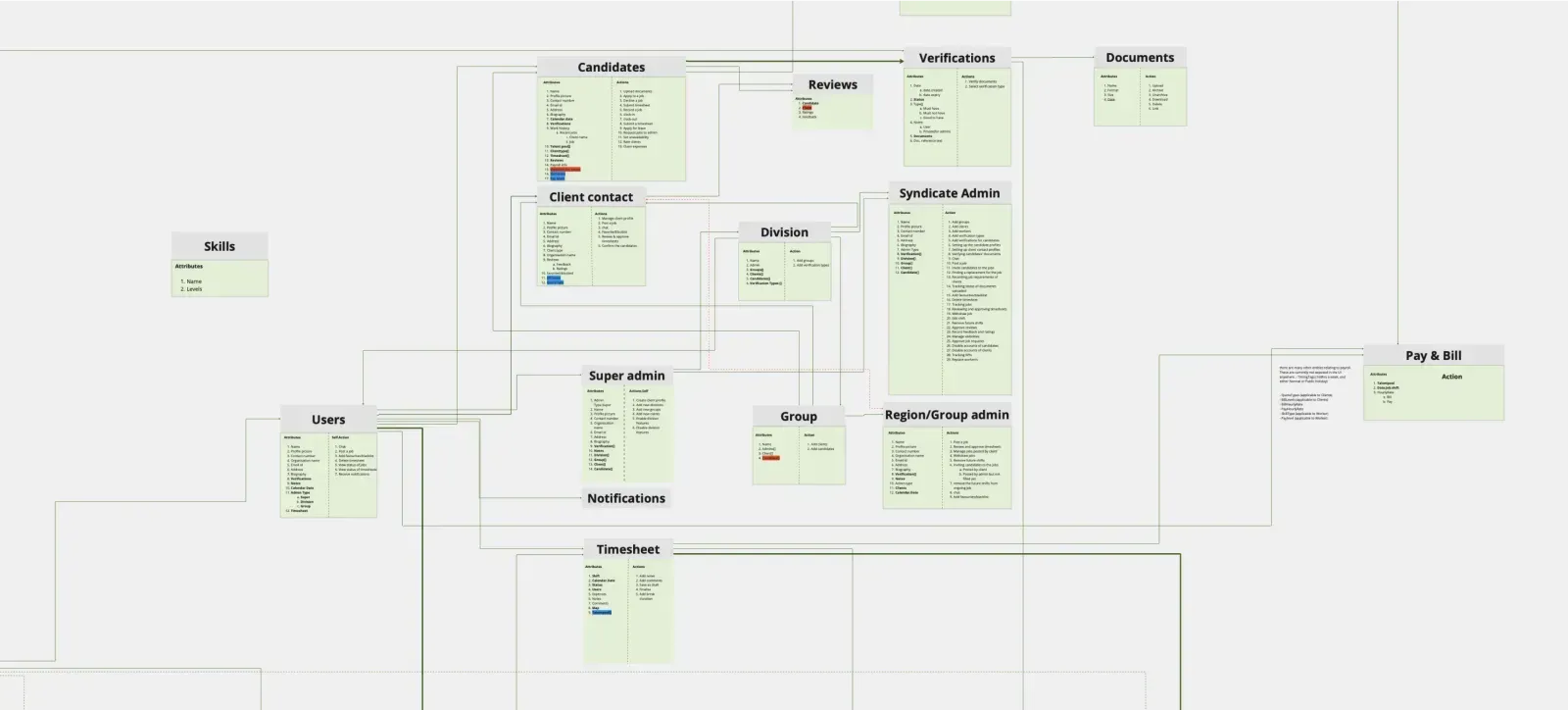
Object oriented approach is a holistic map of the system, where we map all the existing components and relationships in the system. While mapping all the objects and the relationships between them, we identify the core objects of the system. With the help of the research data, like, business perspective of the problems of the system, market perspective from the competitor study, and users’ experience from the user interviews, feedback and queries, the problem areas in the system are highlighted and deconstructed in the object diagram. To be able to add/eliminate objects and relationships to improve the functionality, modules, and architecture of the system.
This approach fueled innovation while optimizing Scissors for the needs of temporary staffing agencies:
The initial onboarding process within Scissors was plagued by challenges that hindered user adoption. Scissors' team faced the arduous task of manually onboarding users, understanding the nuances of their organizations, uploading databases, training users, and customizing the product to meet their specific requirements. This comprehensive process spanned multiple weeks, and by the time users gained access to the platform, many had already abandoned it.
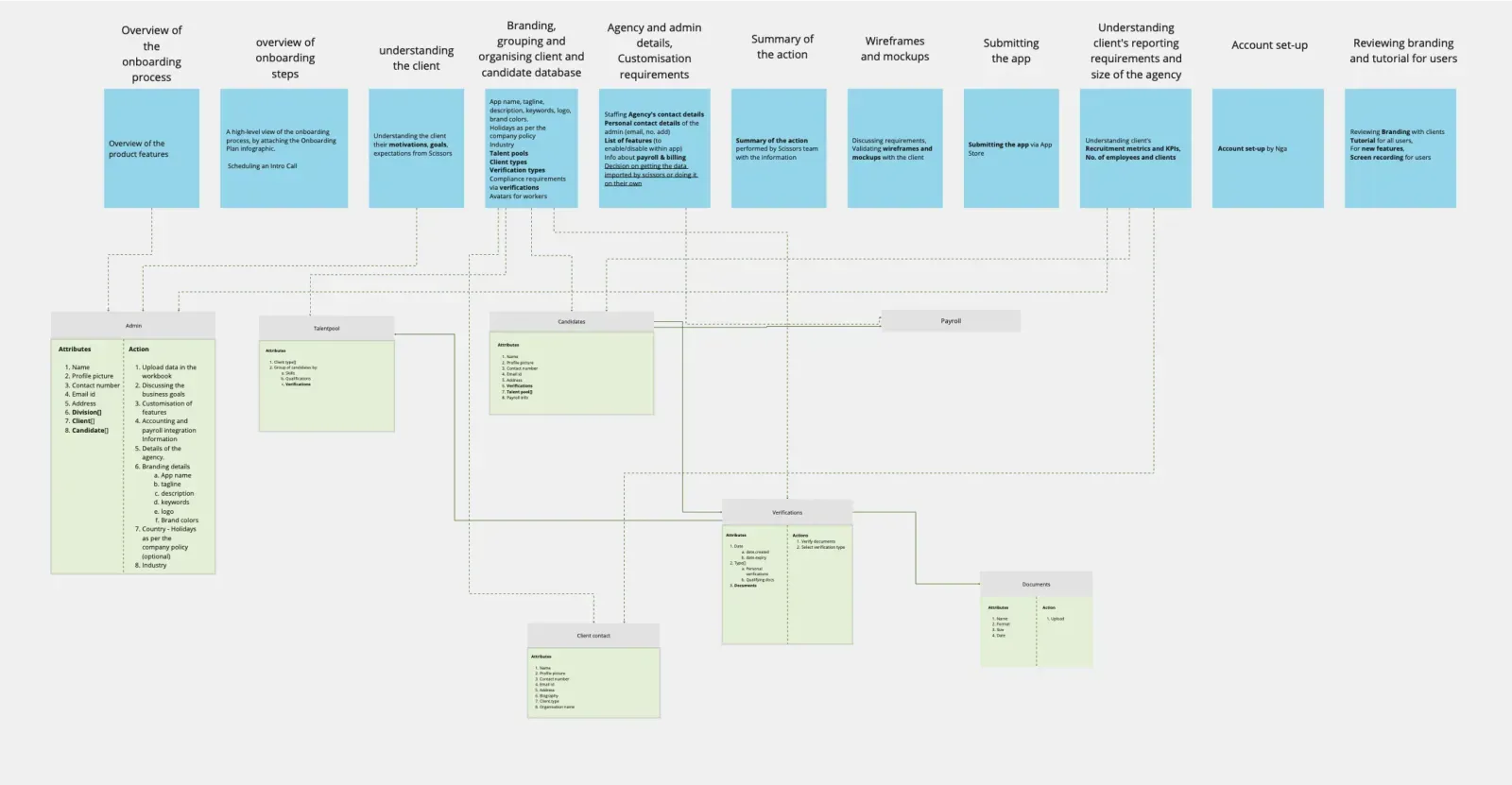
With the help of user flow, user journey map, and object diagram, the design team in collaboration with the Scissors team, identified the crucial onboarding steps and automated the onboarding process.
To ensure a tailored experience for every user, Scissors recognized the importance of understanding the unique branding and organizational details of each client which was a part of the brand values. This detail fetching was automated, allowing users to input their details effortlessly, which reduced the complexity of onboarding without compromising customization.
The existing candidate shortlisting process within Scissors was characterized by rigidity, leaving recruiters with limited flexibility. However, an in-depth analysis, driven by UX research findings, revealed opportunities for improvement through the object-oriented approach.
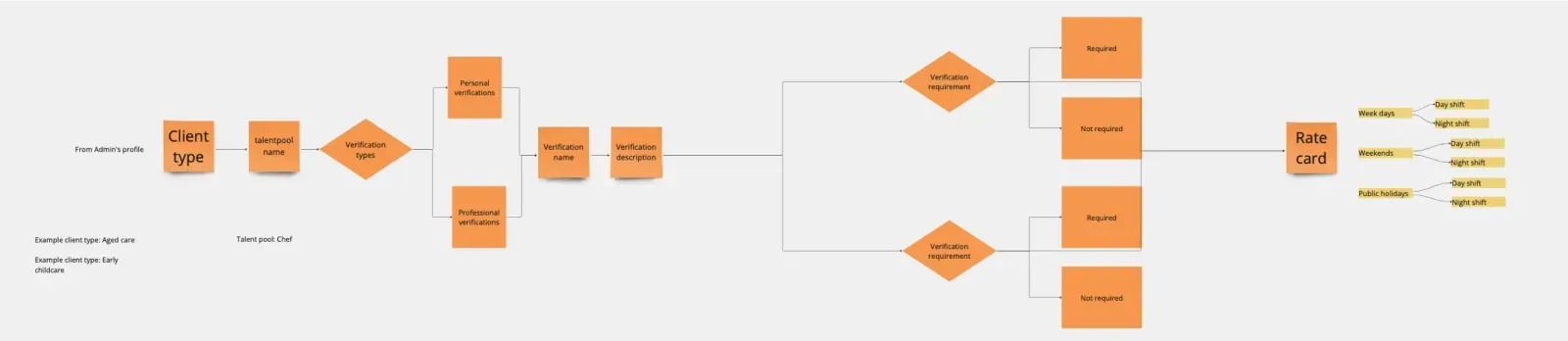
Leveraging insights from UX research, the object-oriented approach led to the redefinition of candidate shortlisting rules. This innovation granted recruiters the flexibility to shortlist candidates with unconventional qualifications, expanding the talent pool and enabling more informed hiring decisions.
The concept of talent pools was underutilised, and UX research uncovered user confusion regarding their purpose. Harnessing these insights and guided by the object-oriented approach, the team redefined talent pools to offer better filtering and categorisation capabilities.
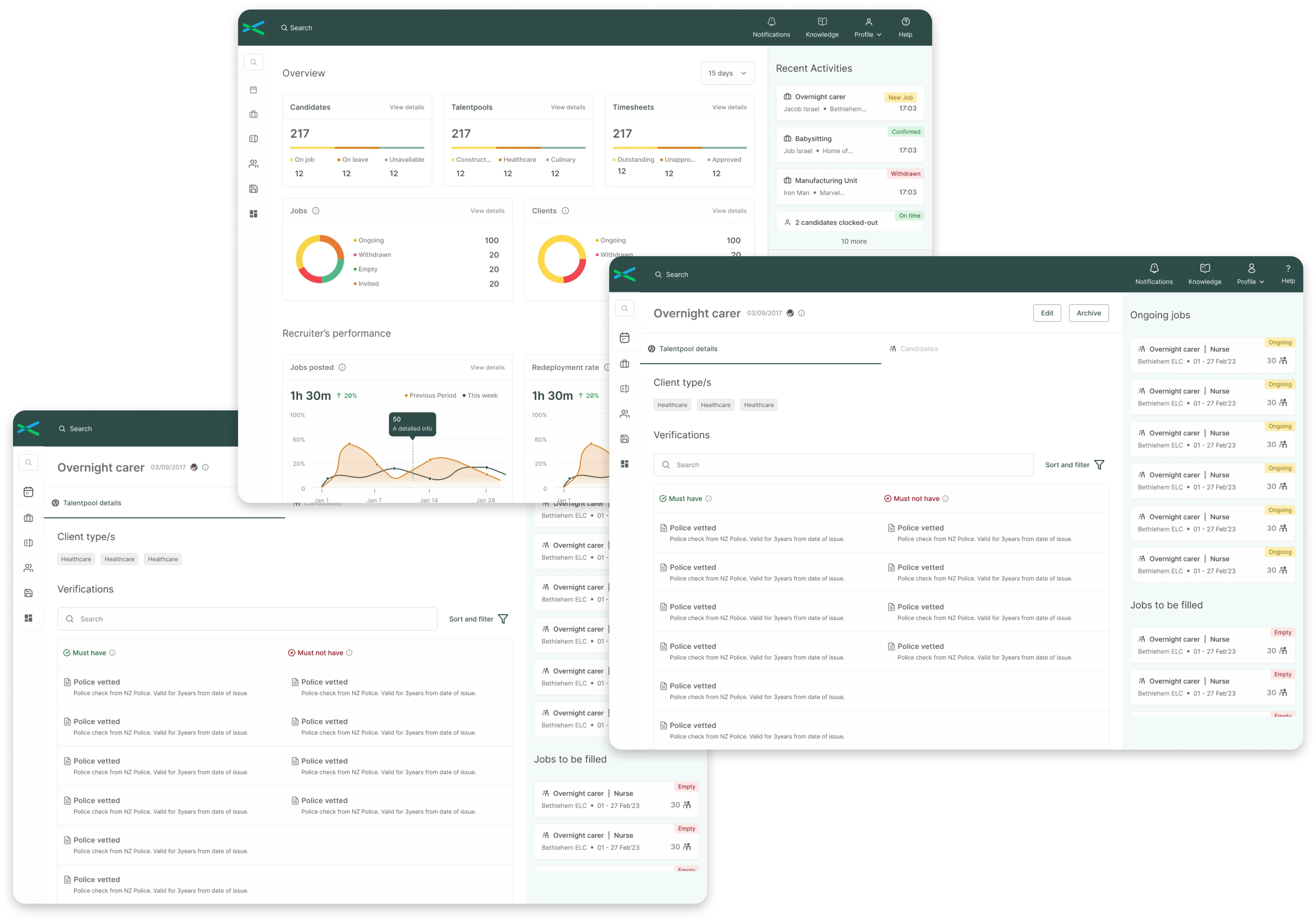
Through data-driven UX research, the object-oriented approach led to the creation of an enhanced talent pool module. This allowed users to filter and categorise candidates with precision, making talent pool management a seamless experience.
Creating job postings was a pivotal function within Scissors, yet it required optimization. The object-oriented approach highlighted inefficiencies, leading to the development of a more streamlined and user-friendly job creation process.
Object-oriented insights informed the redesign of the job creation process. The result was a more intuitive workflow that reduced time and effort, elevating the overall user experience.
The redesign of Scissors' onboarding experience was a pivotal step in ensuring user adoption and reducing abandonment rates. By eliminating manual intervention, streamlining branding and organizational details, and expediting training and customization, Scissors transformed a cumbersome onboarding process into a swift and user-friendly experience.
The strategic adoption of an object-oriented approach, coupled with data-driven UX research, served as the driving force behind Scissors' transformative journey. By deconstructing the existing system and aligning it with user needs, we could improve existing core modules and pioneer innovative solutions through UX for temporary staffing agencies. This commitment to user-centered design and technology-driven solutions exemplifies Scissors' leadership in the temporary staffing agency software sector, demonstrating the immense potential for innovation in this dynamic industry.