Case study hero background image

ConnectX

ConnectX — Building Energy Management / 0 to 1 AI Product UX

COMPANY

ConnectX

SECTOR

Building Energy Management

THE WORK

Product definition and working demonstration

Problem

Complex SaaS products are rarely used by a single type of user. Different teams approach the same system with different goals, questions and decisions to make. While one person may need a strategic overview, another may need operational details or deeper analysis. A traditional dashboard struggles to balance these competing needs without becoming crowded or fragmented. The challenge was to design a unified experience that could support diverse workflows while keeping every interaction relevant.

Solution

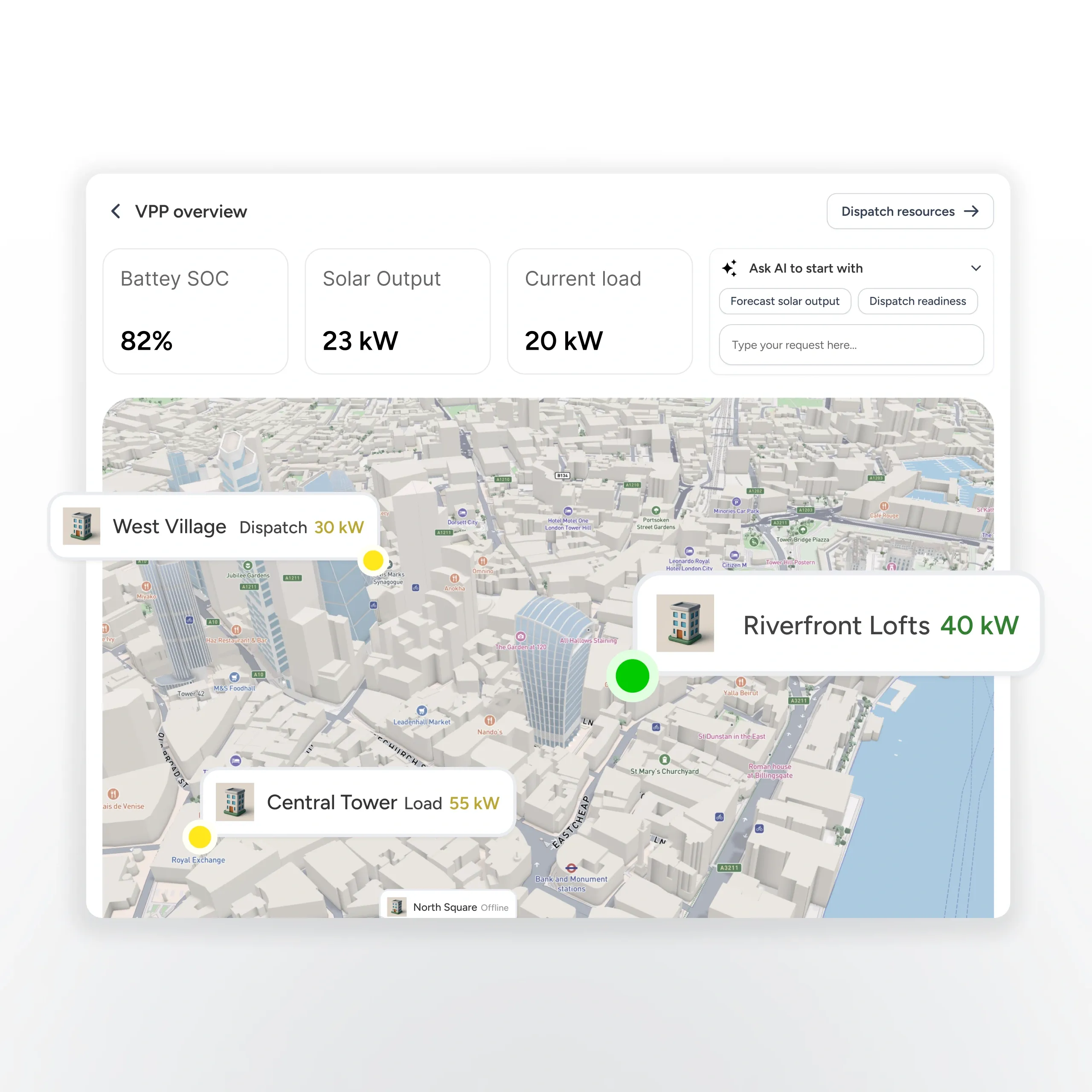
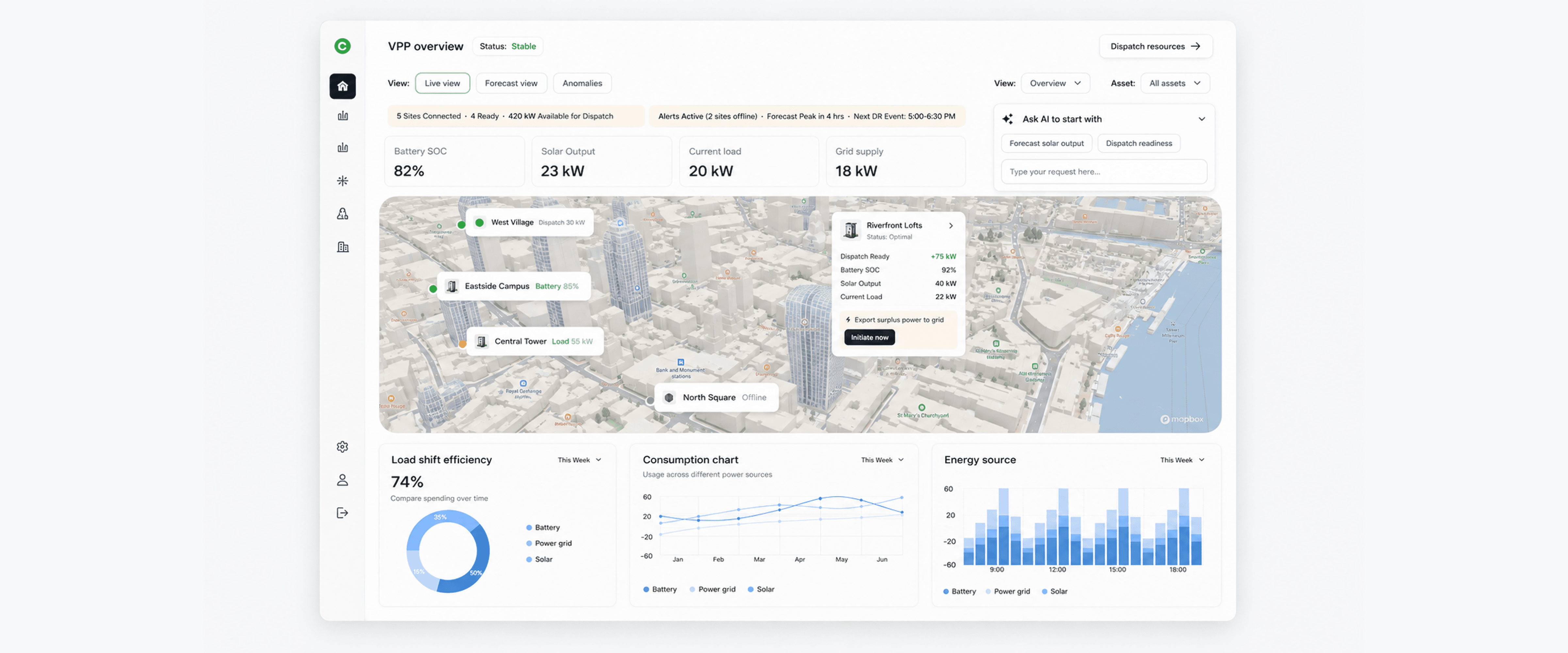
Instead of creating separate dashboards for every user type, we explored a dynamic workspace model in which the experience could adapt to the user’s intent, context and information needs.

01 / THE DILEMMA

A vision, a deadline, and no product structure

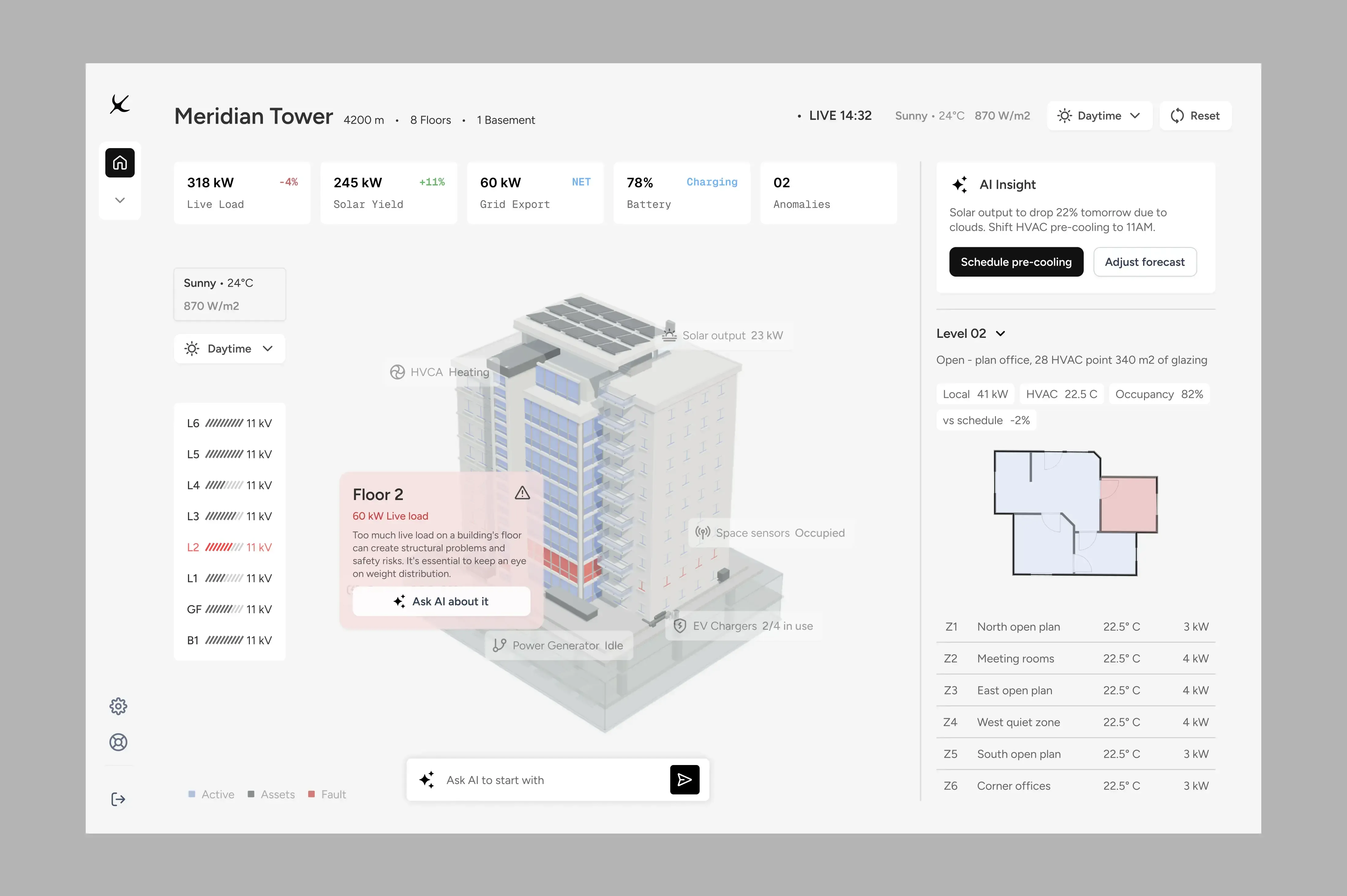
ConnectX wanted an AI-first product for managing energy across commercial buildings. It arrived with personas, KPIs, feature ideas and AI-generated concepts of a dashboard and digital twin. The ambition was clear. The product model was not. Facility, finance and sustainability teams needed different answers from the same energy system, but the interface could not permanently show every possible view.

  • One interface per role, or one adaptive workspace?
  • How does a request become specific data, modules and actions?
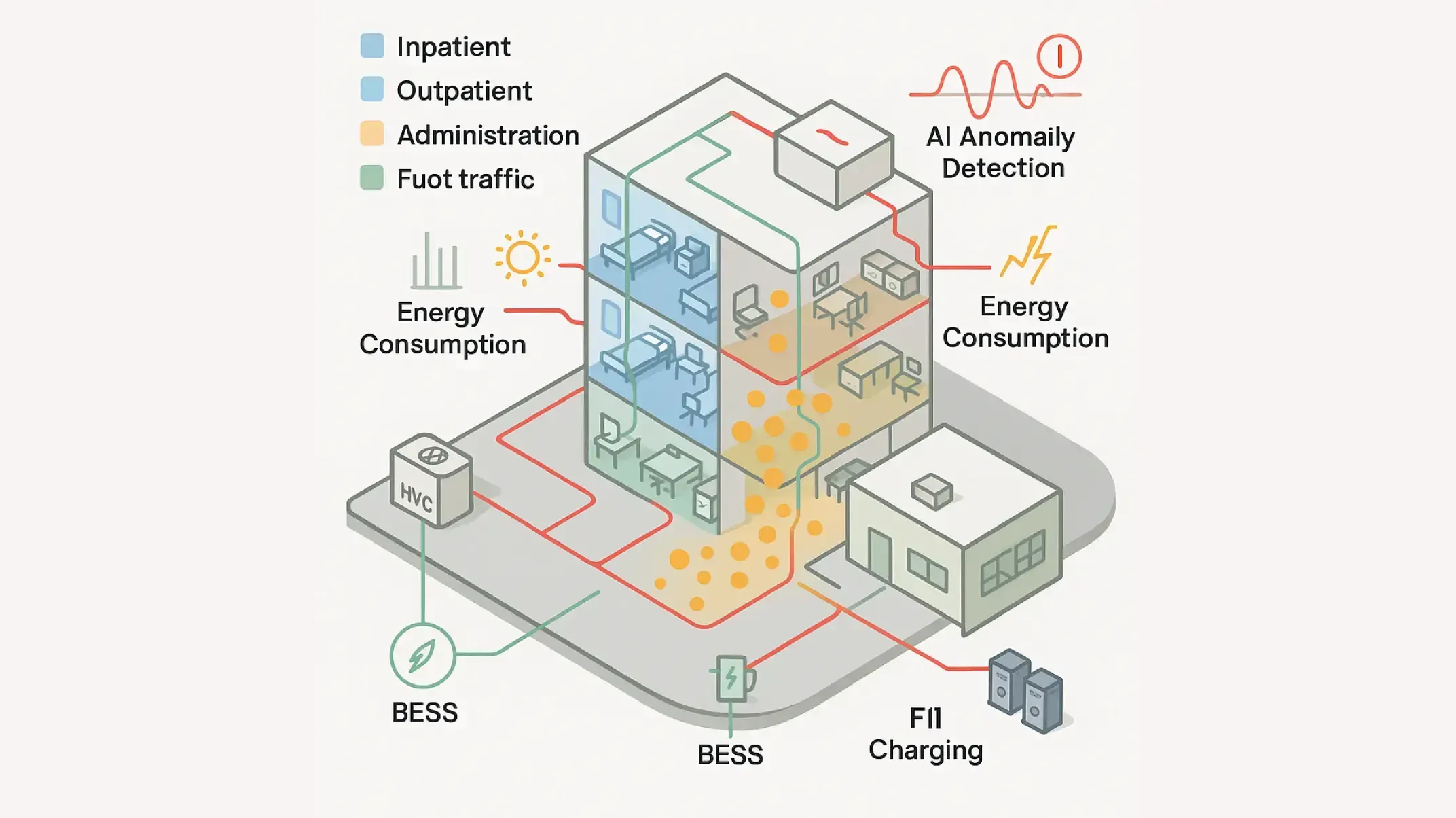
  • When does the digital twin explain something useful?

02 / THE REAL QUESTION

Does AI sit inside the dashboard, or decide what it shows?

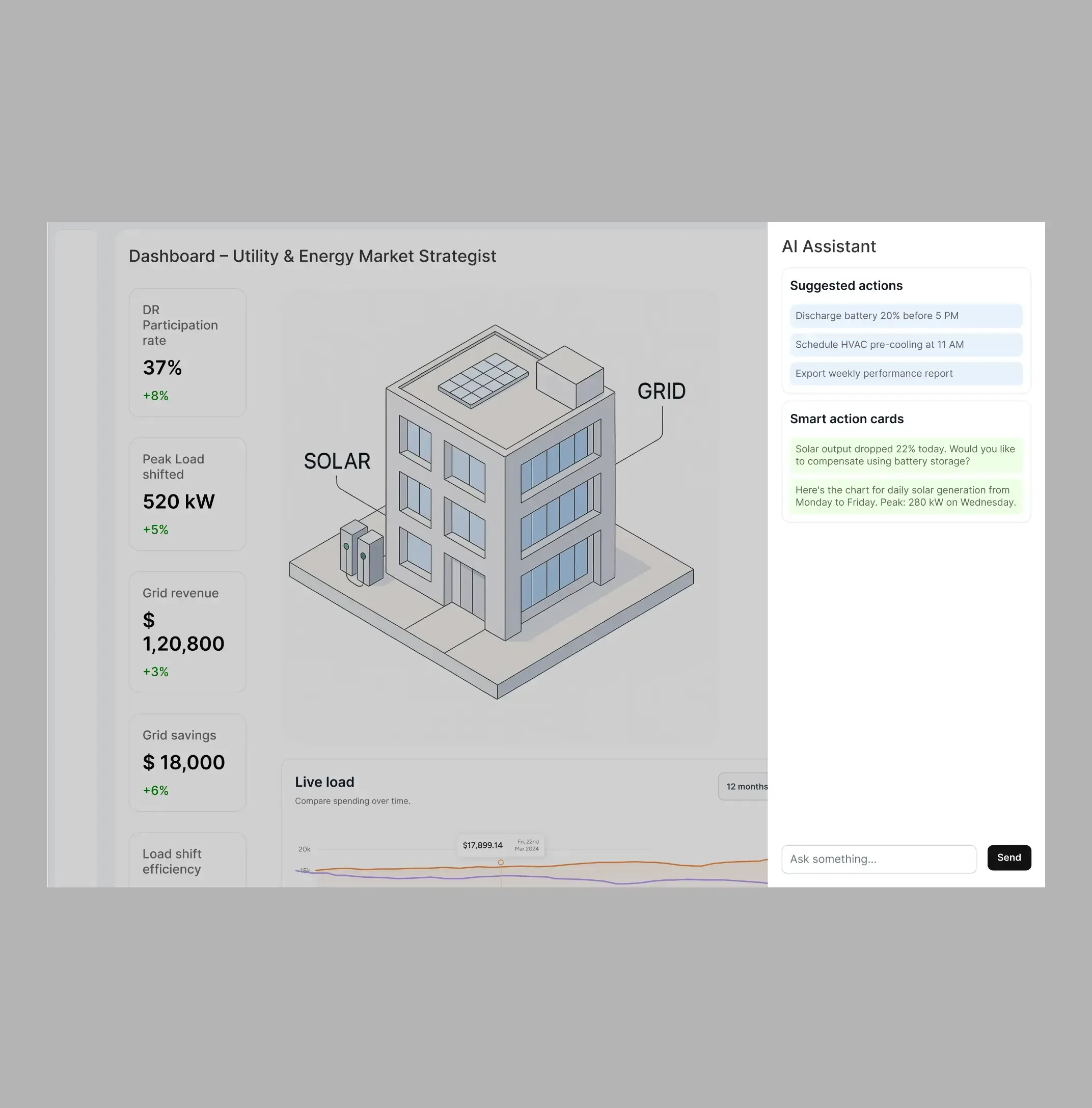
Two directions were credible. A dashboard with an AI assistant was familiar and predictable. AI helped users operate an interface whose structure remained fixed. An intent-led dashboard allowed the request to determine which KPIs, assets, charts and twin views appeared. Neither was sufficient alone. A fixed dashboard could not adapt across roles. A chat response could not provide persistent context and direct control.

03 / THE DECISION

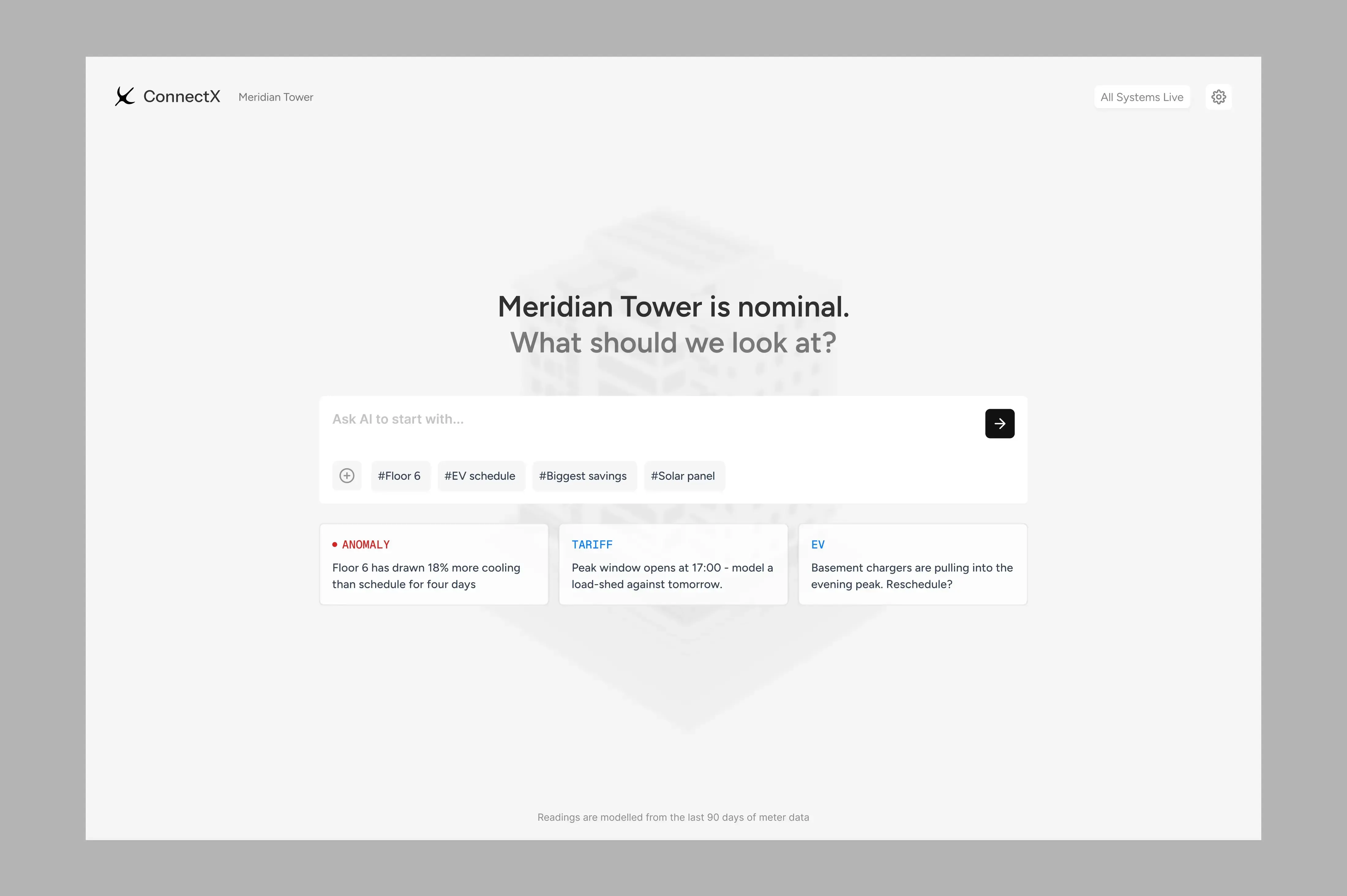
Conversation determines intent. The dashboard remains the workspace.

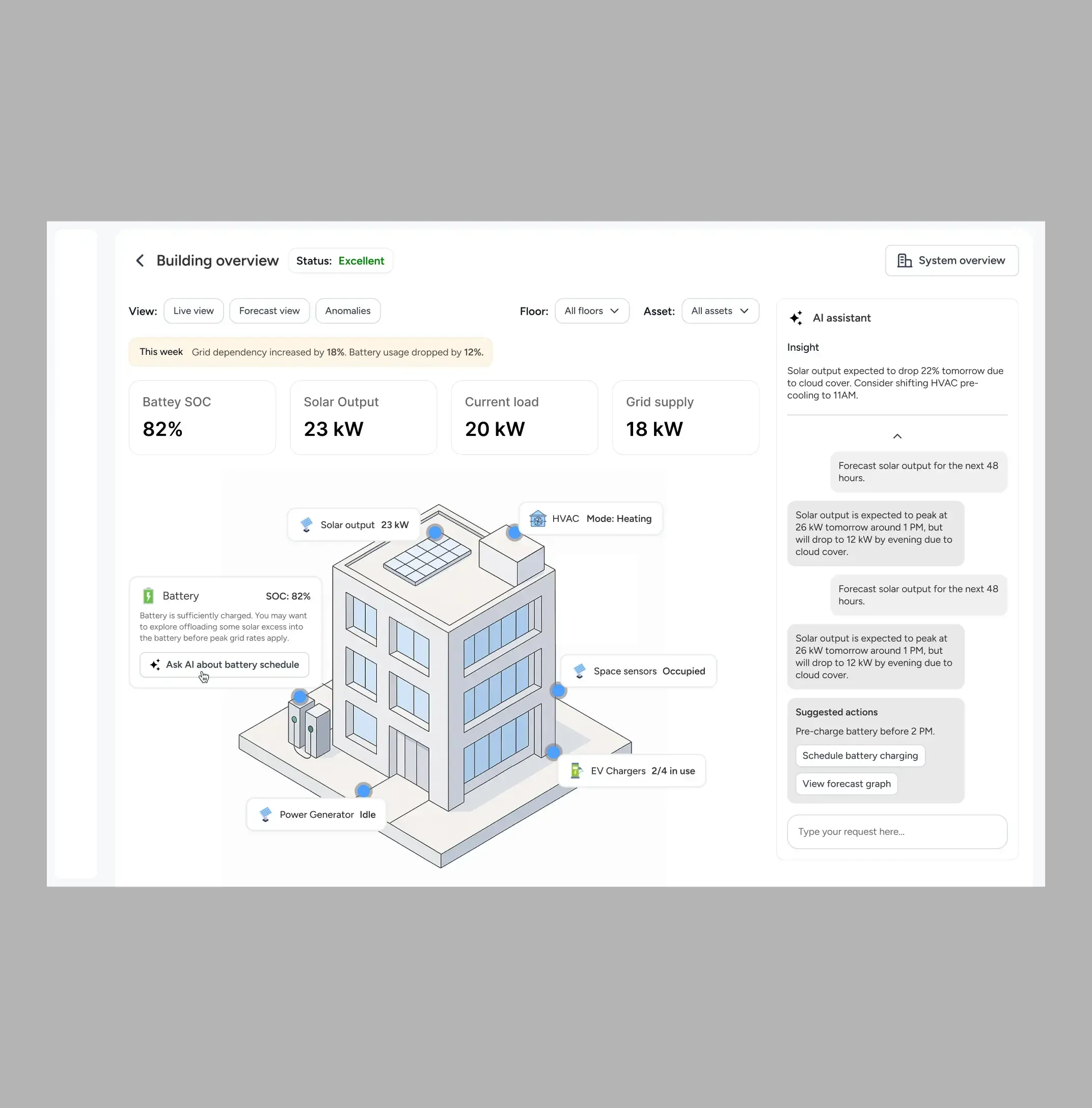
Conversation established what the user wanted to understand. The product then assembled a persistent workspace around that intent. Users could continue in natural language or work directly with the controls, charts and twin.

THE PRODUCT DECISION

The product did not replace the dashboard with chat. It used conversation to construct the right dashboard for the situation.