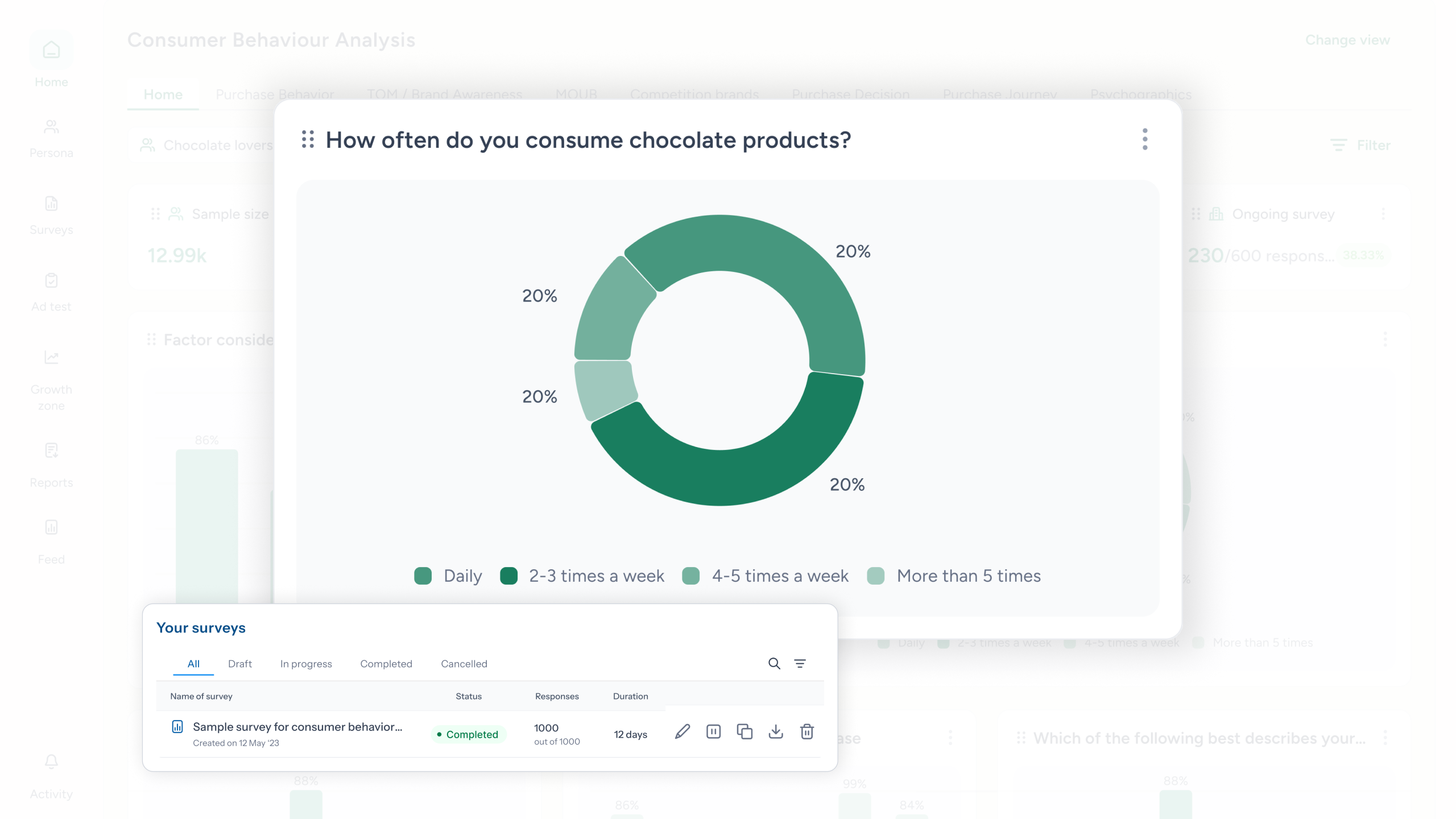
Tcules combined secondary and competitor research, stakeholder interviews, personas and product definition. From that we shaped an MVP where AI could generate a starting questionnaire and the researcher stayed responsible for purpose, wording, sequence and revision.
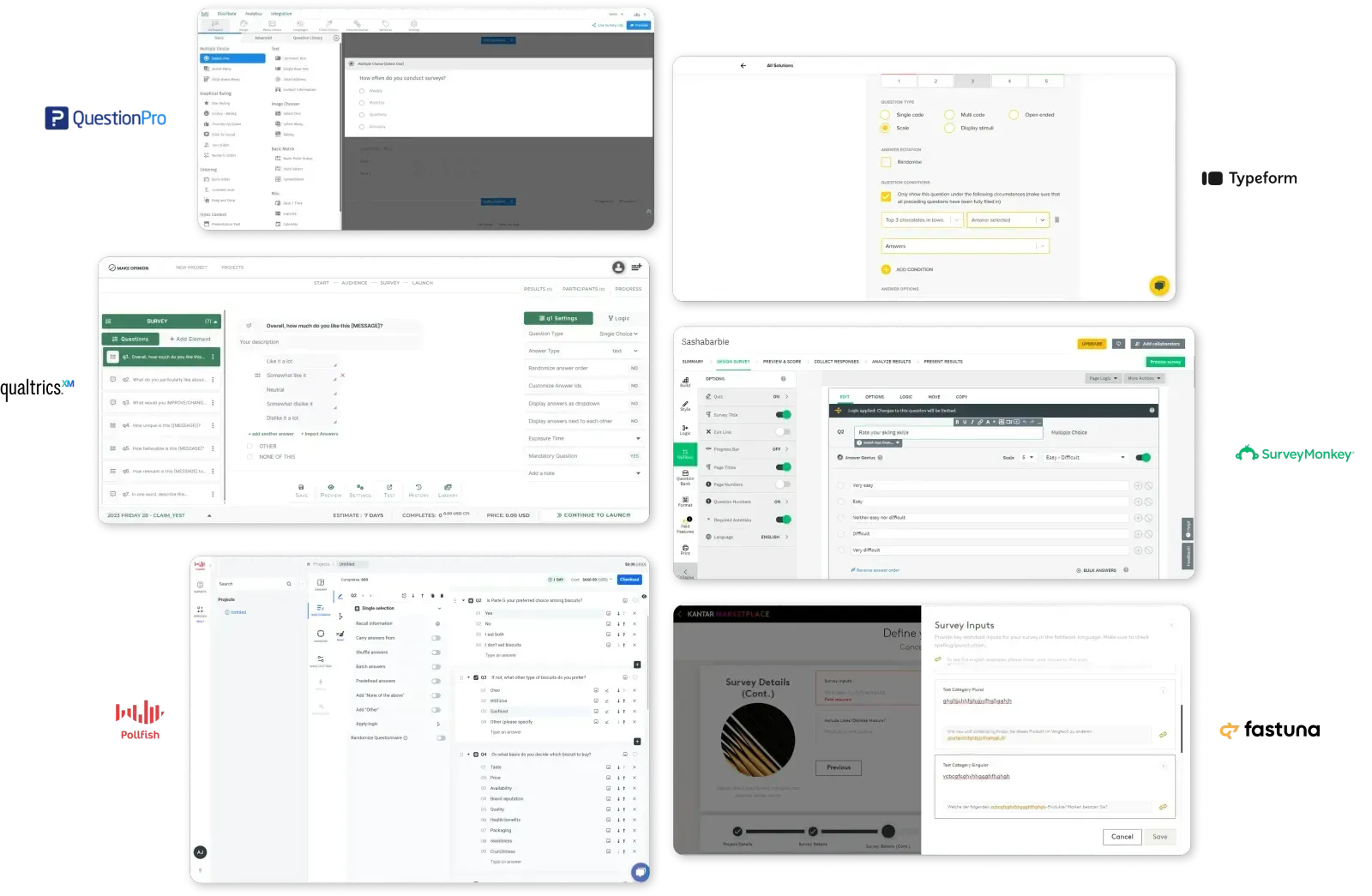
Competitor survey tools reviewed during the Novus Insights research
AI takes away the blank page. The researcher keeps the wording, the purpose and the final say.
Related Tcules services: Human-in-the-Loop Workflows and Product Design.
Market research software UX that starts from the research question
A brand manager or researcher arrived with a business choice to make, and needed survey answers to inform it. So the product had to connect an initial prompt to a questionnaire structure that could be inspected and changed.
Tcules investigated the market and competitors, spoke with stakeholders and developed role and workflow models. That work shaped an MVP in which the system could generate a starting questionnaire and propose additional questions.
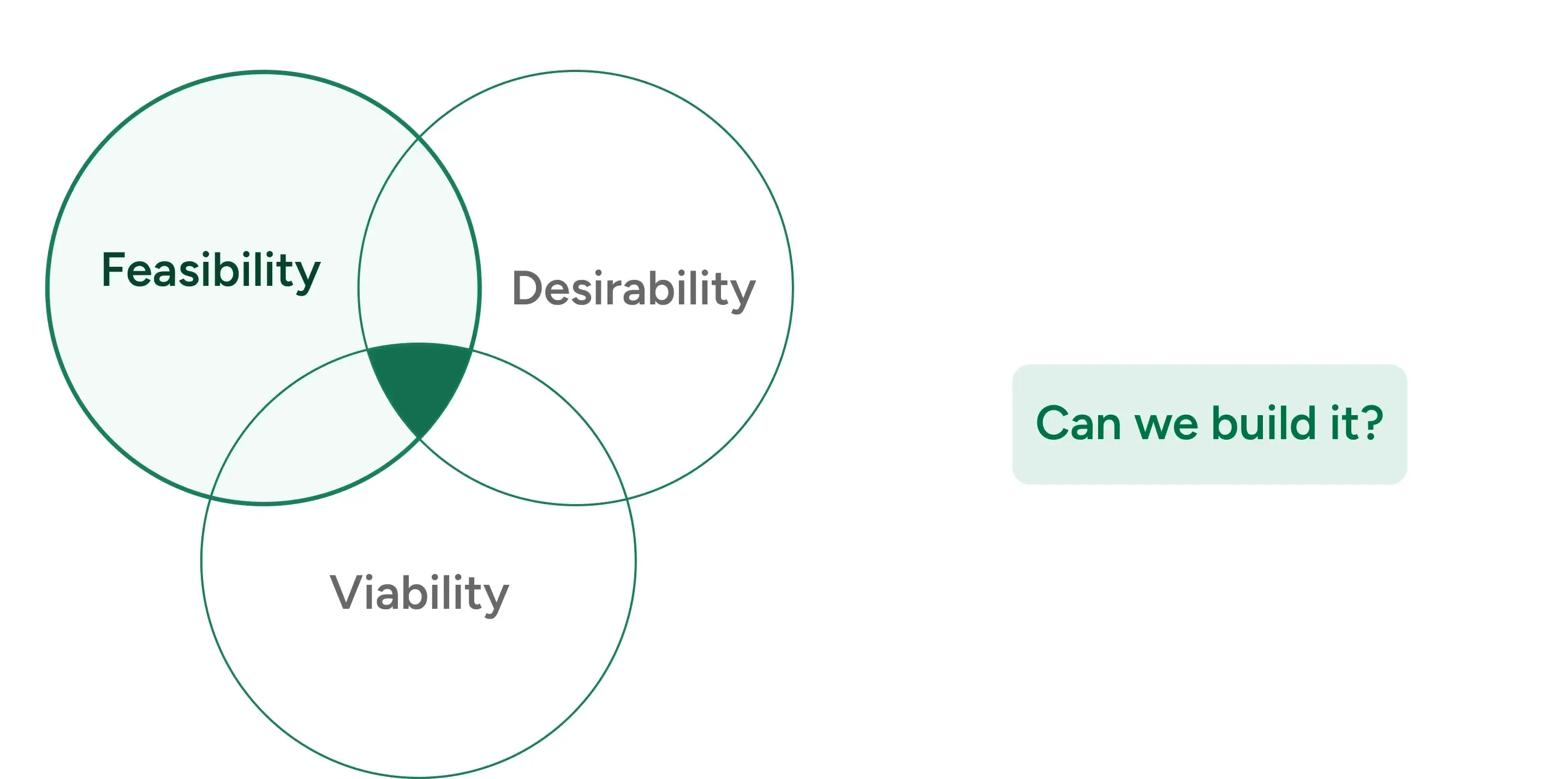
Venn diagram of feasibility, desirability and viability, highlighting feasibility: can we build it?
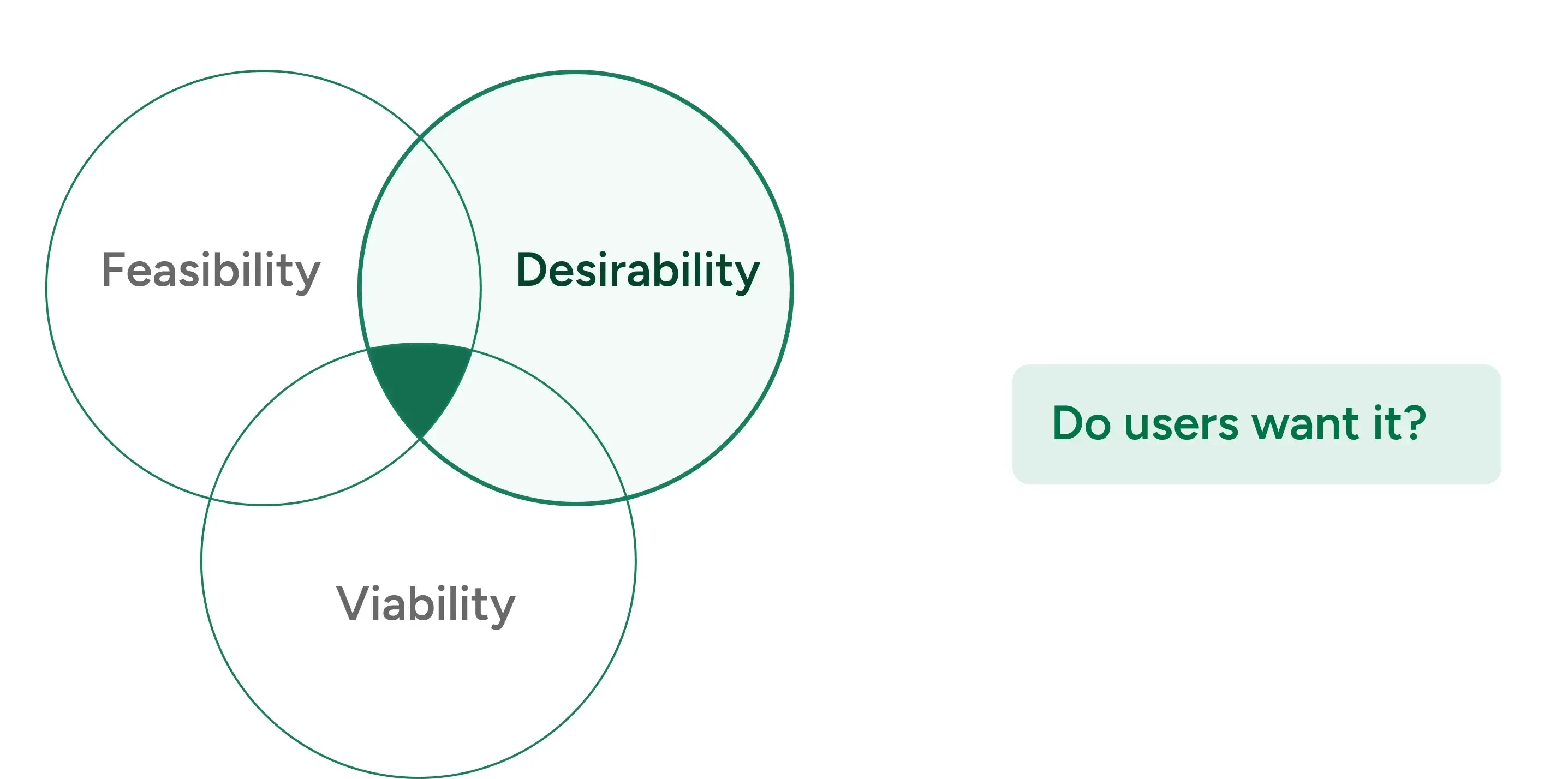
Venn diagram of feasibility, desirability and viability, highlighting desirability: do users want it?
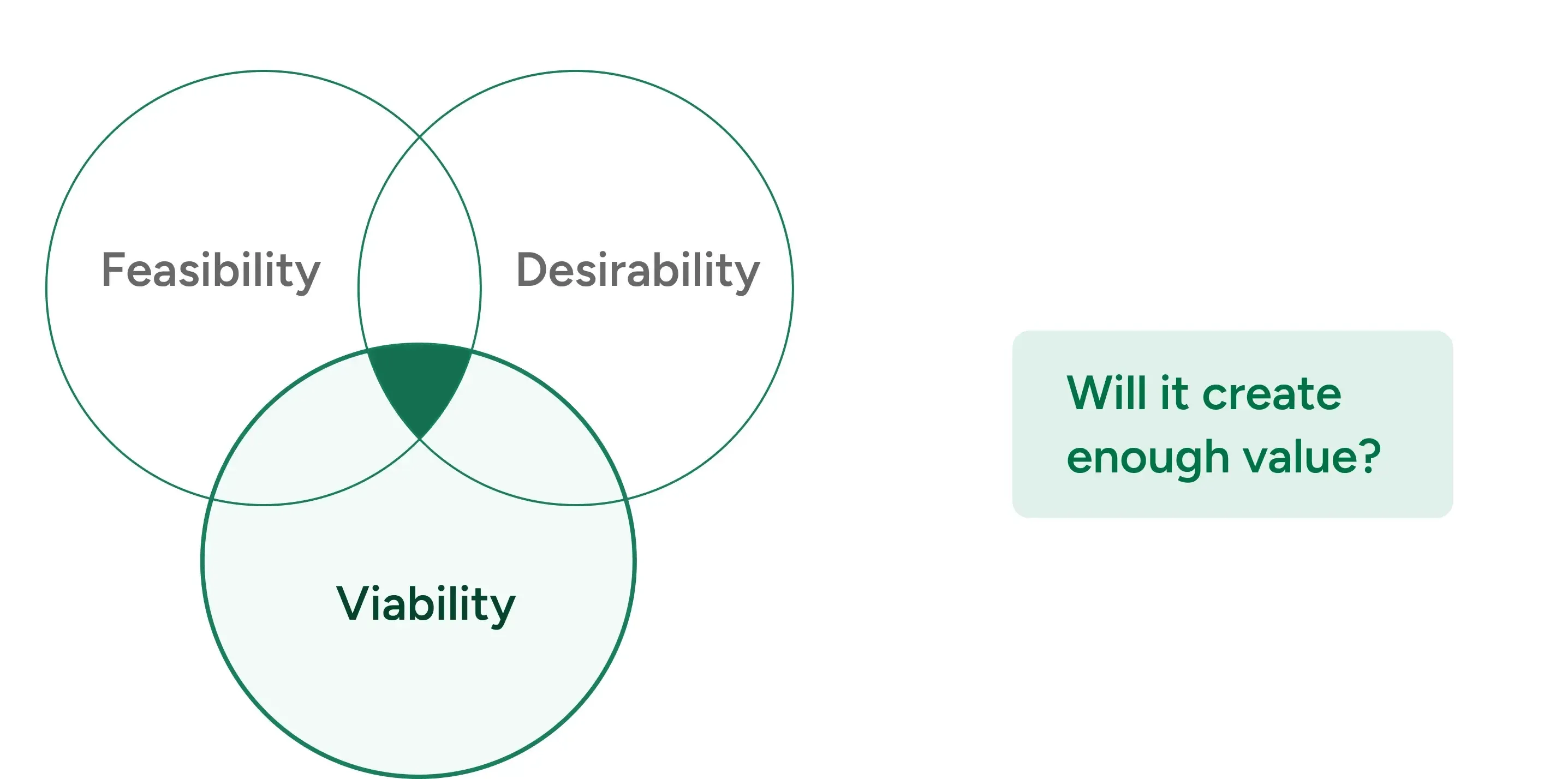
Venn diagram of feasibility, desirability and viability, highlighting viability: will it create enough value?
The boundary that mattered was editability. A generated question still had to be checked for validity, bias and fit with the audience, so it stayed open for a researcher to review.
AI survey builder design: generated questions the researcher can rewrite
The MVP put the generated draft and the researcher's edits in the same list, with each generated question carrying its source prompt. A question the researcher rewrote kept the original visible beneath it, so a reviewer could see what the model had proposed and what a person had changed.
Those capabilities served different moments. Generation could create a first structure. Suggestions could help the researcher notice missing areas. Editing let the person correct assumptions, change order and align the questionnaire with the research purpose.
The researcher could use the model to get started, then shape the questionnaire around the actual study. Review and editing were part of the core workflow.
What Novus received: an AI survey MVP from research question to questionnaire
Novus gained an MVP direction that connected research intent to a generated draft, further suggestions and deliberate editing. AI gets the questionnaire started, and the researcher stays responsible for its wording and purpose.
Because every rewrite keeps the original visible, a reviewer can see where the model's draft ended and the researcher's judgement began. That record is what lets a researcher stand behind an AI-drafted questionnaire in front of a client.
AI drafts with human approval: five things the product keeps apart
The same pattern applies whenever AI generates material that an expert must stand behind. The product should keep five things distinct:
- the user's underlying question
- the system's proposed output
- the criteria used to review it
- the changes made by the expert
- what counts as approved
Those distinctions keep generated material reviewable. With them in place, the model does useful work while the product keeps professional responsibility with the expert. As models draft more of the material experts put their names to, these five distinctions become the core of the product.
The interaction pattern in this case is what Tcules designs as human-in-the-loop workflows: the AI proposes, an accountable expert reviews, and the product records the difference.
Questions about researcher control over AI drafts
What did Tcules design for Novus Insights?
Tcules designed the MVP for Novus Insights' AI-assisted survey product, which brand managers and researchers use to write questionnaires. Before the design, the work covered secondary and competitor research, stakeholder interviews, personas and product definition.
How did Tcules keep researchers in charge of AI drafts?
Generated questions and the researcher's edits sat in the same list, and each generated question carried its source prompt. When a researcher rewrote a question, the original stayed visible beneath it, so a reviewer could see what the model proposed and what a person changed.
What could the AI do in the survey product?
The AI could generate a starting questionnaire and propose further questions, which helped the researcher spot missing areas. The researcher then corrected assumptions, changed the order and checked each question for validity, bias and fit with the audience.
Who uses the Novus Insights survey product?
Brand managers and researchers who need survey answers to inform a business choice. They start from a research question, let the AI draft a questionnaire and then shape it themselves. The BuildTwin and Eden AI cases below show other AI products where a person's judgement sits inside the workflow.
In Novus Insights' words
“Tcules interviewed our stakeholders and studied the market before drawing a single screen. In the survey tool they designed for us, the AI suggests and the researcher decides, and every generated question shows the prompt behind it.”