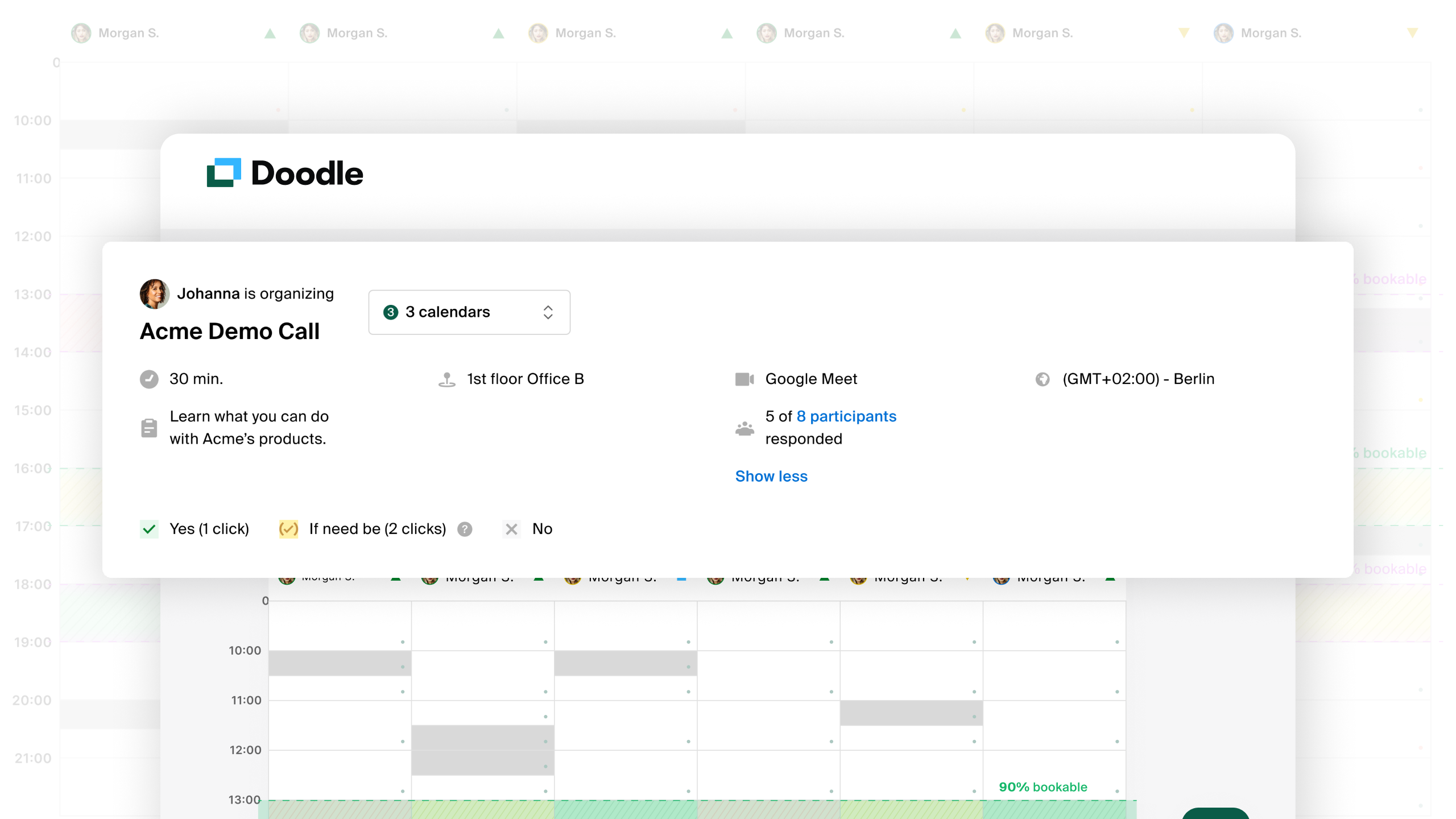
Tcules used research and product modelling to link meeting type, priority and tentative availability to a bookability interface. Organisers could compare possible times by how likely each one was to hold, which turned a calendar search into a recommendation people can reason about.
Research changed what the product needed to know before it could suggest a dependable time.
Related Tcules services: Information Architecture and Workflow Design and Design Systems.
How object modelling and one interview revealed the missing variable: meeting priority
The starting problem looked like automation: bring availability together and propose viable times for enterprise meetings. Automation works when the product knows what it is optimising for.
Tcules reviewed Doodle's existing research and product concepts and studied competitor patterns. We prepared a research questionnaire for stakeholders and for people who coordinated meetings across organisations. During discovery, we diagrammed the objects in play: participants, organisations, meeting types, time, calendars and scheduling conditions.
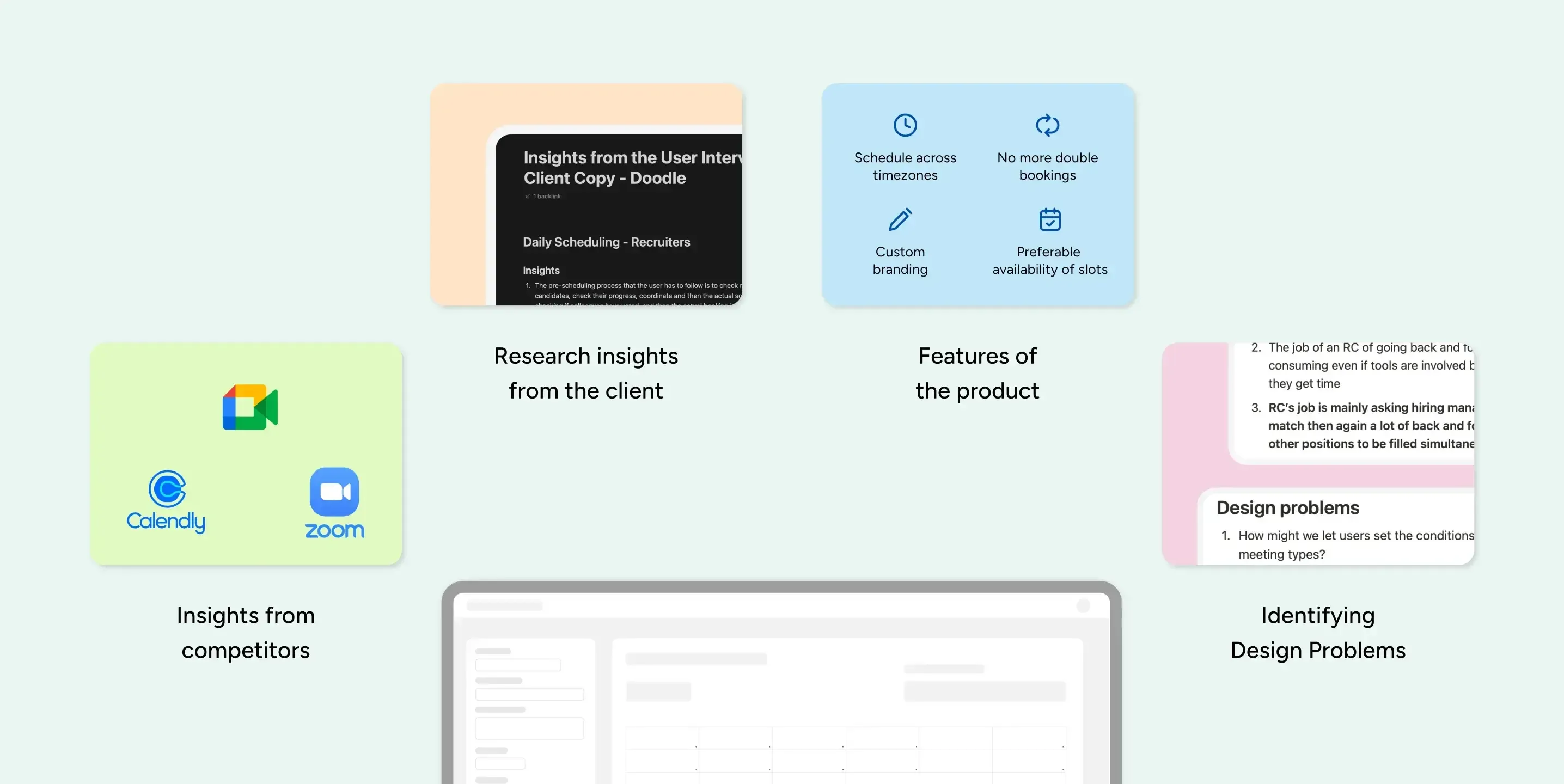
Doodle research map linking stakeholder insights to scheduling needs
One interview surfaced a variable the current model had missed. A participant's availability depended on how important the meeting was. Someone might appear unavailable for a routine conversation and still make time for a review, approval or customer commitment that carried greater priority.
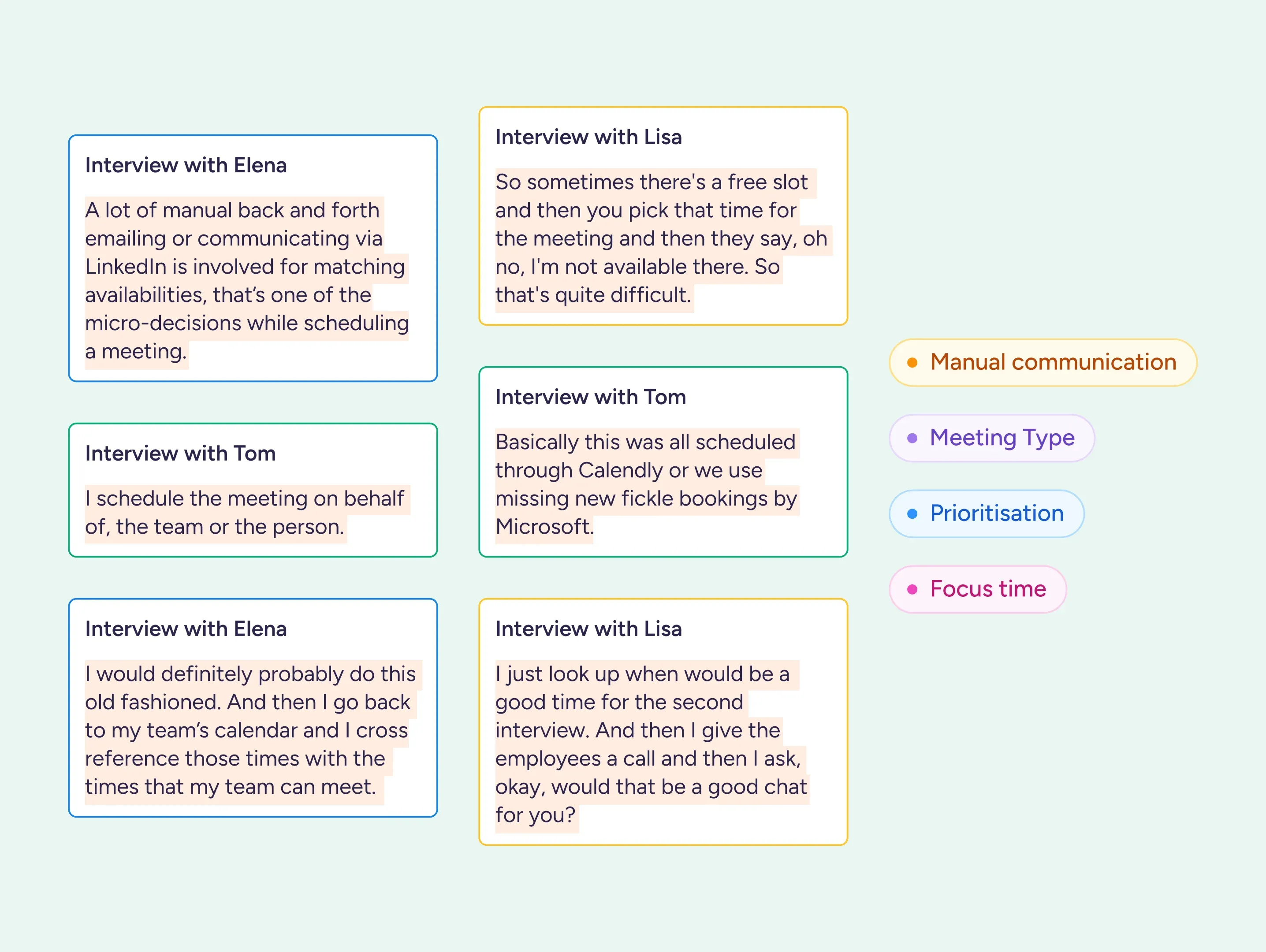
Notes from Doodle stakeholder interviews about scheduling meetings across teams
The priority finding changed the product question from “When is everyone free?” to “Given the type and priority of this meeting, how dependable is this time?”
Meeting priority and tentative availability, combined in a bookability score
Tcules developed a framework for an organisation to identify meeting types and express their relative priority. Tentative weekly schedules added a second layer, so the system could tell firm commitments from provisional availability.
The interface direction brought those inputs together in a bookability score. The score was an estimate of how confident the product could be from its current information. It helped the organiser compare possible times.
Doodle object model linking meeting priority and tentative availability to a bookability score
A score is not certainty, and in enterprise workflow products the gap matters. A number carries false authority when the interface hides what it stands for. So the product work tied the score to meeting type, priority and tentative availability. The organiser could then read it as a guide to weigh.
Bookability interface: Doodle's existing components, plus new calendar ones
Once the information structure was defined, Tcules explored interface concepts and developed the chosen direction. Standard interactions could use existing Doodle components. The calendar and bookability work needed new components, organised to stay consistent with the product system.
The new scheduling direction took shape inside Doodle's existing product language, so it reads as part of Doodle. Doodle kept the scheduling engine and calendar integrations in-house, and Tcules gave the new model its form in the interface.
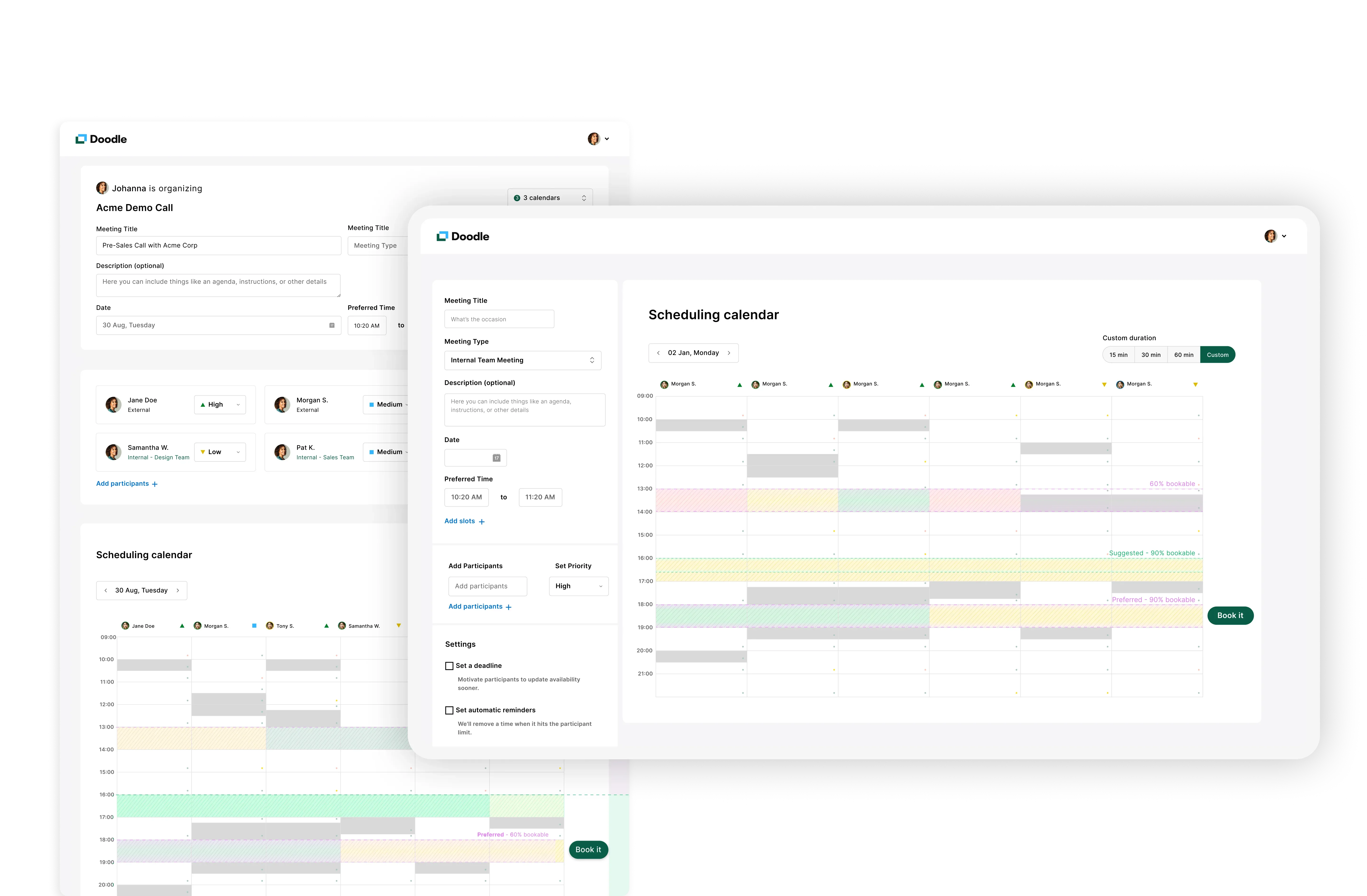
Doodle scheduling components added to its existing design system
Enterprise meeting scheduling UX: from free slots to dependable times
The work moved the MVP from finding an empty slot to helping an organiser judge whether a meeting could hold.
| Initial question | Product direction |
|---|---|
| When is everyone available? | How dependable is this time for this meeting? |
| What does the calendar show? | What do meeting type, priority and tentative commitments tell us? |
| Which times can we offer? | How can the organiser compare the confidence behind those options? |
Defining the product model first lets the interface support the choice people are actually making.
Before automating a choice, name what the product must know
This applies when a workflow looks ready for automation but the criteria behind the choice are still implicit. In scheduling, the missing variable was priority. In another product it might be authority, risk, data quality, capacity or exceptions.
Start by naming the objects and variables the product must understand before it can make a responsible recommendation. More interface options can wait.
We expect this to matter more as AI assistants and agents start booking time on people's behalf. They can act well only on criteria a product has named, and Doodle's MVP names them: meeting type, priority and tentative availability.
Tcules' information architecture and workflow design work finds those objects and variables before the interface is drawn.
What Doodle says about the research and the MVP
“Their research changed how we thought about scheduling across companies. The MVP was clearer because of it, and so was our roadmap.”

“Tcules reused our existing components wherever they could, and designed new ones only for the calendar and scheduling work our system didn't cover yet. Everything they added was organised to fit the system we already had.”
“Impressed with the design team's efficiency. Not a rush job, but constant iteration with our feedback.”

Doodle case study FAQs
What did Tcules design for Doodle?
Tcules designed the direction for Doodle's enterprise meeting-scheduling MVP. Research and product modelling linked meeting type, priority and tentative availability to a bookability score in the interface, with new calendar components for Doodle's design system.
How do you design enterprise meeting scheduling around confidence?
Give the organiser an estimate of how dependable each time is, and show what that estimate rests on. Doodle's bookability score combined meeting type, priority and tentative weekly schedules. Tying the score to those inputs let organisers read it as a guide to weigh when comparing possible times.
How did object modelling shape the Doodle MVP?
During discovery, Tcules diagrammed the objects in play: participants, organisations, meeting types, time, calendars and scheduling conditions. One interview then showed that availability depended on how important a meeting was. Priority joined the model, and the product question moved from who is free to how dependable a time is.
Who owned the scheduling engine and calendar integrations?
Doodle did. Tcules made the new product model visible and usable in the interface. Standard interactions used existing Doodle components, and new components were designed only for the calendar and bookability work, organised to stay consistent with the product system.